
How to Use GEO Score as a Pre-Publish Checklist for New Content
If you’re managing an experienced content team, you know the rhythm of the content calendar: research, draft, edit, and—finally—hit “Publish.”
For years, hitting publish felt like the finish line. Today, it’s just the start of the AI validation process.
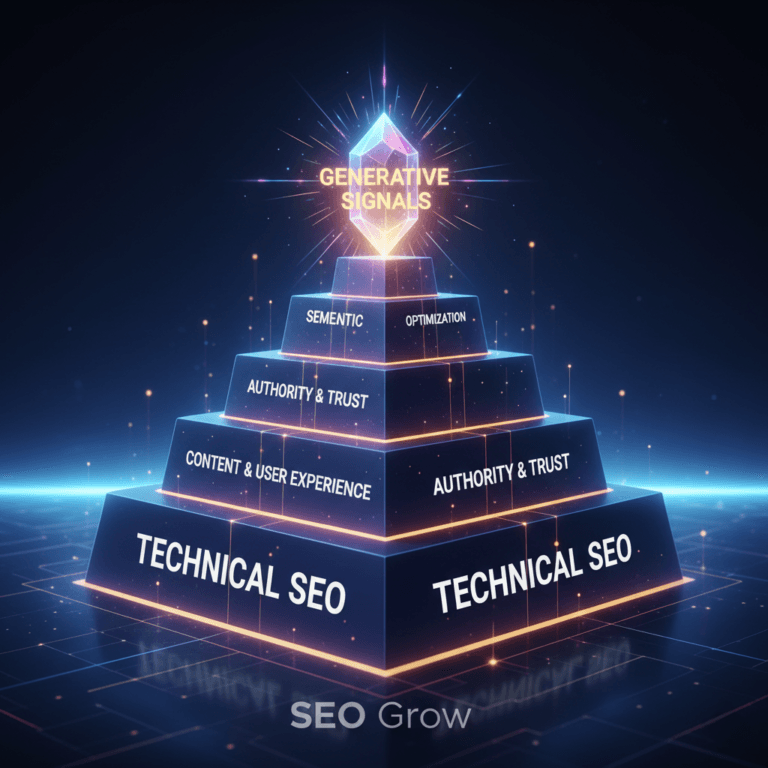
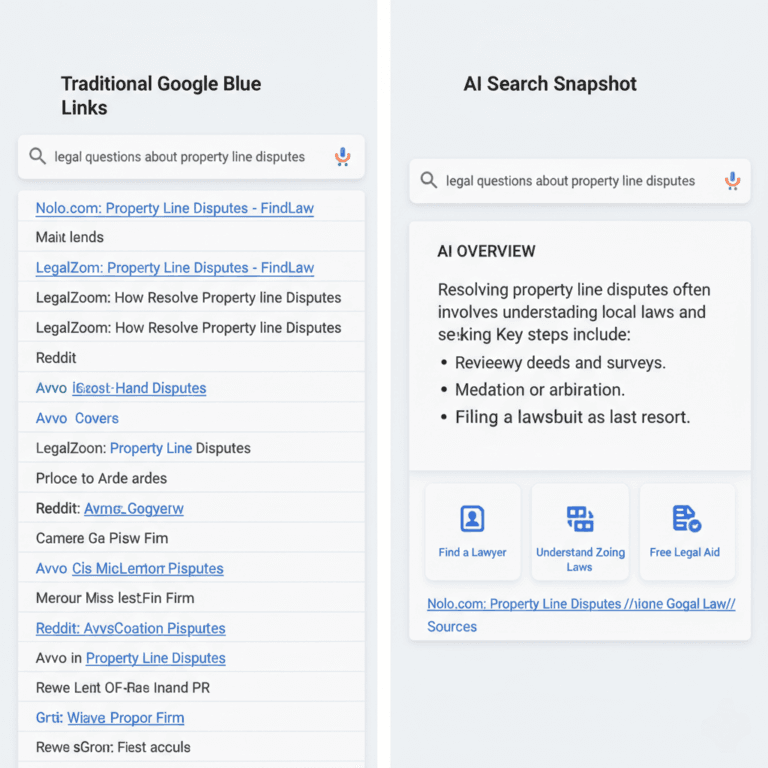
Ranking organically is still essential, but earning a high organic rank and being cited by an LLM in an AI Overview are two entirely different battles. One requires traditional SEO fundamentals; the other requires a new layer of structural proof: Generative Engine Optimization (GEO).
We are writing for an era where AI validation precedes human consumption. The GEO Audit is the non-negotiable, pre-flight check that ensures your work is structurally and semantically ready for citability before deployment.
Table of Contents
Below is the four-step geo readiness audit checklist that integrates our rules-based tool into your standard publishing workflow.
1. The First Pass – Checking Your Data Density (The GEO Check)
The fundamental difference between old-school SEO and Generative SEO is the value placed on verifiable data. Large Language Models prioritize sources that are data-dense (rich with stats, percentages, dates, and quantitative evidence) because this helps them avoid the critical risk of hallucination.
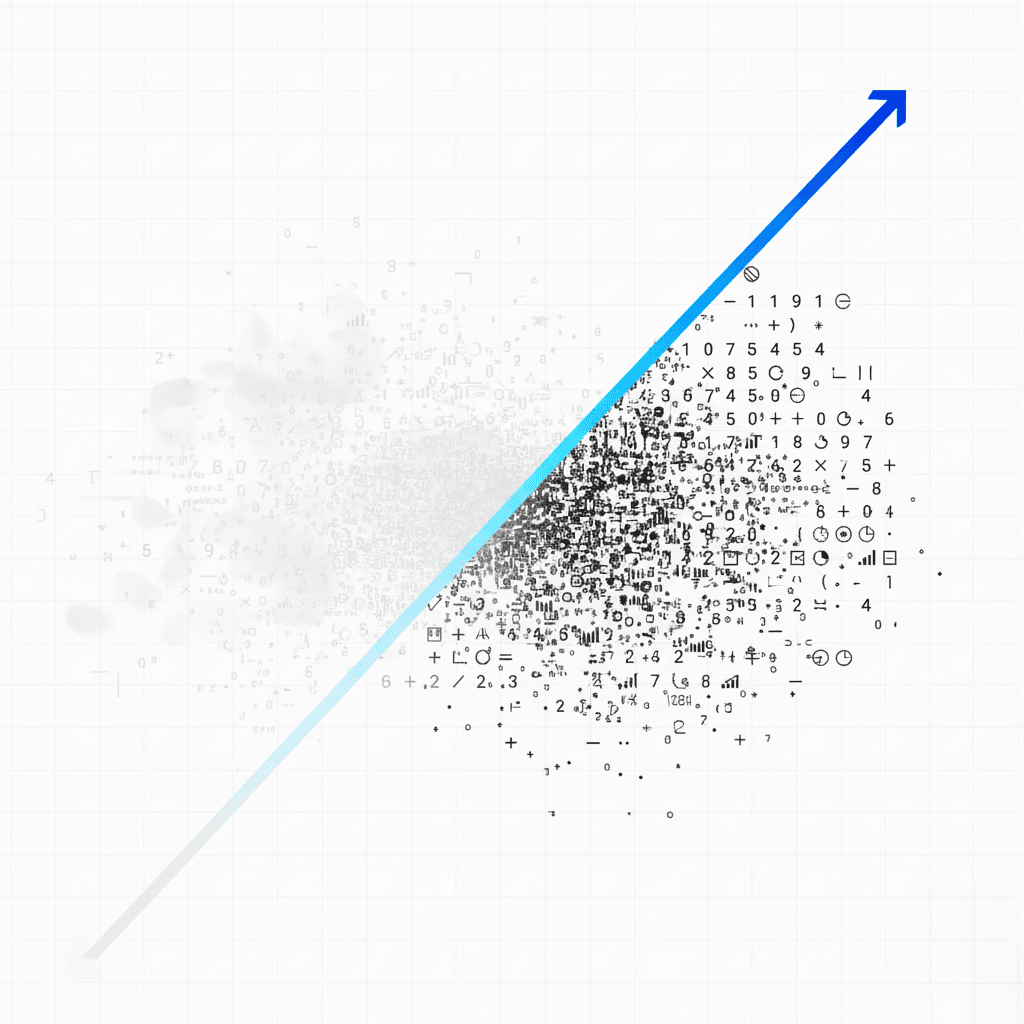
If your content is text-heavy but fact-light, the LLM will deem it too risky to cite.
The Tactical Instruction:
- Run the Audit: Take your final draft URL (or staging URL) and run it through the SEO Grow Audit Tool.
- Check the Data Density Score: Locate the specific GEO metric for Data Density.
- The Fix: If the score is low (e.g., under 75), stop. Before publishing, you must incorporate more hard numbers, original statistics, or cited figures. Do not hit publish until you increase the measurable factual density of the piece.
2. Verify Your Citation Architecture
Traditional SEO taught us to build links; modern GEO teaches us to build structural citations.
For an LLM to cite you as an authority, it needs more than just an anchor tag. It needs structural proof of trustworthiness—a direct signal that your piece aligns with Google’s expectations for creating helpful, reliable, people-first content.
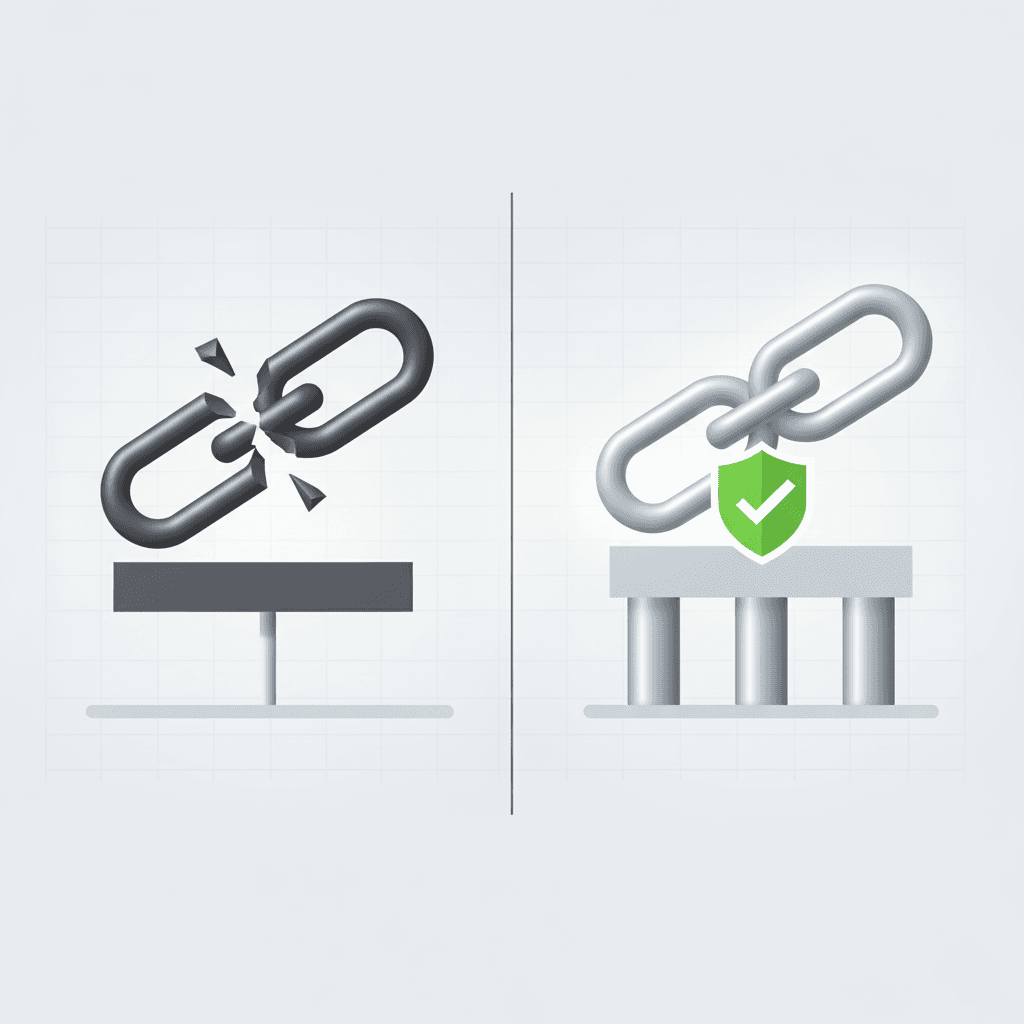
This is why traditional audits are insufficient. They only check for links, not for the structural quality of the source attribution.
The Tactical Instruction:
- Analyze the Code: Review the audit tool’s recommendations related to structural citation and block formatting.
- Check Attribution Formatting: Ensure that direct quotes or explicit source attributions are formatted using the
<blockquotetag or similarly clean, structurally-defined formatting. This ensures the bot can easily register the source, which is an indispensable step in the geo audit process. - Contextual Review: For a deeper understanding of the E-E-A-T implications of this step, refer to our comprehensive guide on The Ultimate Guide to AI SEO Audits.
3. The AEO Structure Test – Reducing Friction
Answer Engine Optimization (AEO) is a structural discipline. It’s the final check to ensure that the AI model can extract the exact answer it needs with zero friction.

If an LLM has to spend milliseconds parsing a complex sentence or table structure, it is structurally inefficient and will be passed over for a more easily digestible competitor—even if your content is better.
The Tactical Instruction:
- Structural Integrity Check: Use the audit tool’s AEO section to identify all instances of data comparison or multi-step processes.
- Verify Tagging: Do you have comparison data? Ensure it’s formatted with proper
<table>tags (with<thead>and<tbody>elements). Do you have Q&A sections? Ensure your subheadings are question-based (H2s) immediately followed by a concise answer paragraph. - The Deep Dive: For a full, granular list of all structural formatting requirements, reference our expanded AEO Audit Checklist Article.
4. The Final Gate: The AI Readiness Score
Your team’s time is too valuable to wait four weeks for search console data to reveal a basic structural error. This is why the geo readiness audit checklist culminates in a single, non-negotiable metric.
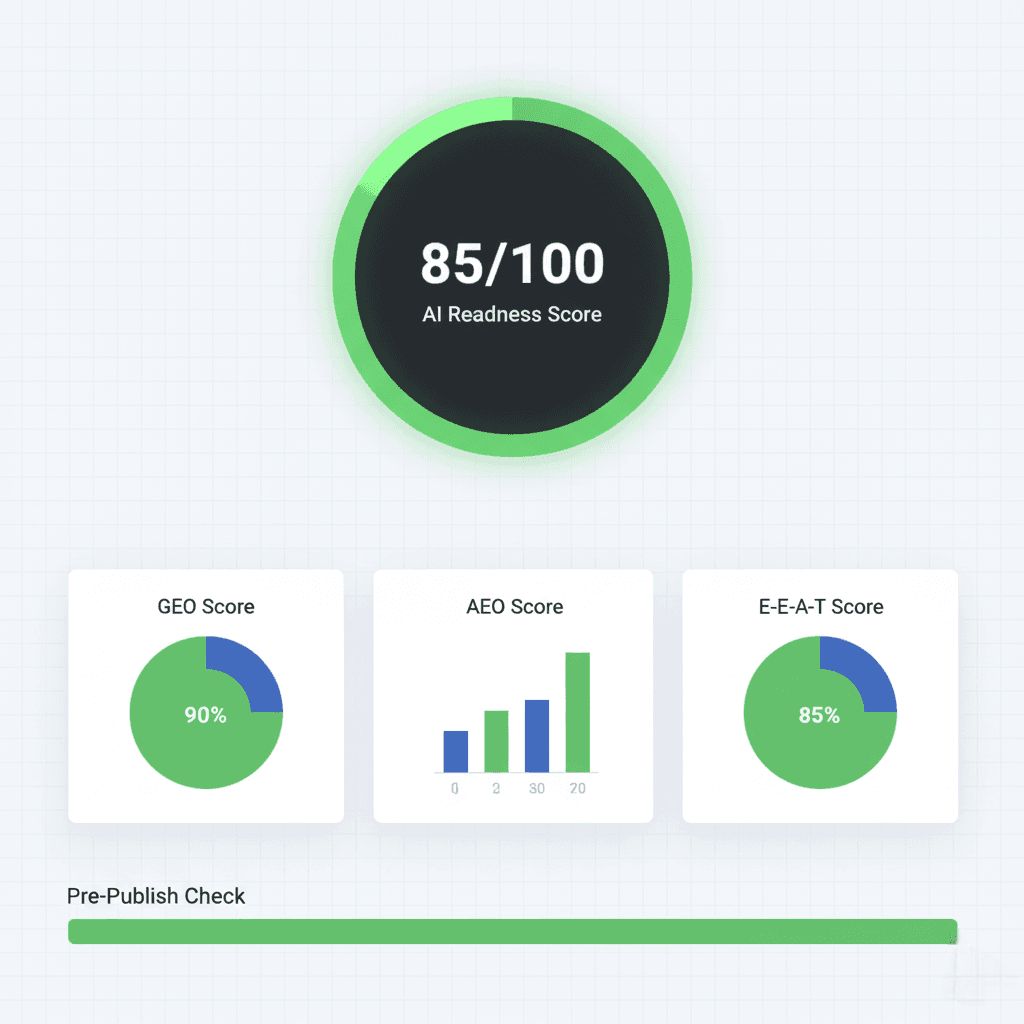
The tool provides an overall AI Readiness Score—a single, objective figure that summarizes your performance across all GEO and AEO checks.
The Tactical Instruction:
- Set the Standard: Establish a new Standard Operating Procedure (SOP) with your content and SEO teams: Do not publish any new piece of content until it hits an overall AI Readiness Score of 80 or higher.
- The Value Proposition: This score acts as your final gate, ensuring weeks of production time aren’t wasted. It eliminates the guesswork and replaces it with a necessary diagnostic, saving weeks of waiting only to discover a basic structural error that prevented LLM citation.
Traditional SEO is the foundation, but it is incomplete. The new layer of GEO and AEO is an additive workflow, not a replacement.
The SEO Grow Audit Tool is a necessary utility that automates the precise, objective, and tedious technical checks required to ensure your content moves from being merely rankable to citable by AI.
Don’t hit publish yet. Run your draft URL through our Free Audit tool and get your baseline AI Search Score now.